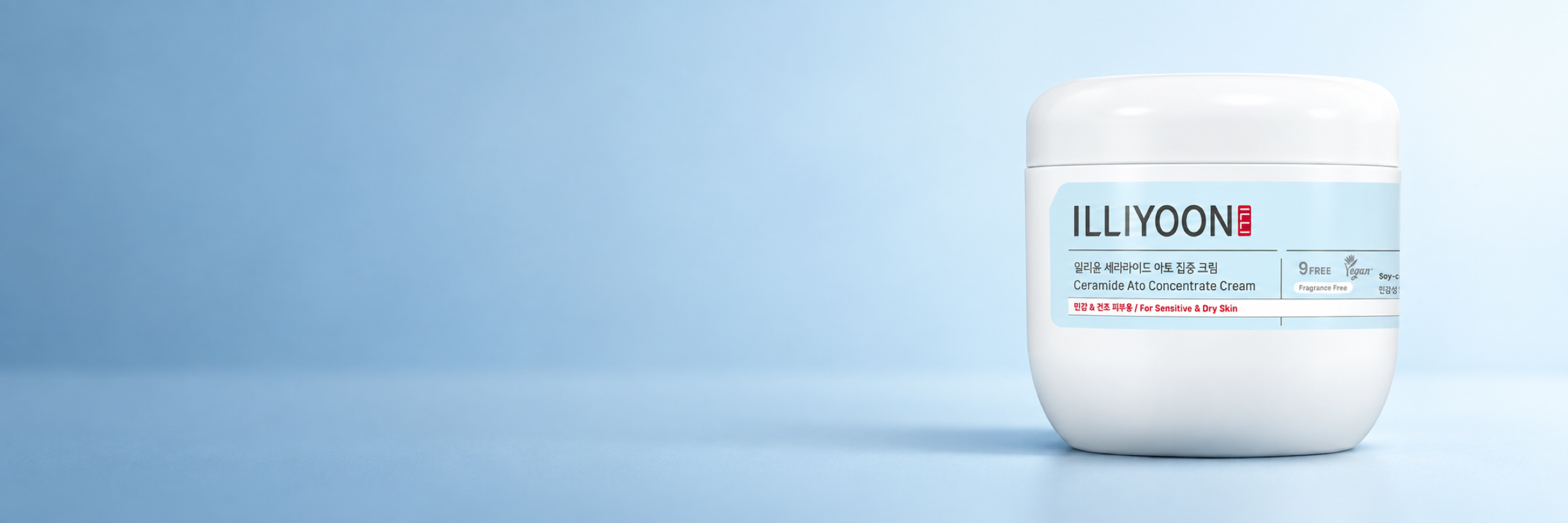
ILLIYOON
If a ceramide cream, a barrier lotion or a soothing gel brought you here, this page covers what ILLIYOON says is in its formulas, how much holds up, and the steps we send.

About
ILLIYOON is a Korean skincare brand operated by Amorepacific, whose Seoul head office address appears on its official site. It describes itself as having thought about nothing but sensitive skin, and names each line for the job it does: Ceramide Ato for dry, itchy skin from infants upward, Ceramide Derma for the face, Ultra Repair for very dry and damaged skin, Probiotics for pH-balanced washes, and a stretch mark line.
Ceramide Ato is the line the brand is best known for, and it is specific about what is inside. Its labels declare ceramide content in parts per million on the ingredient list itself — the Lotion lists ceramide CPP at 65.5ppm and ceramide NP at 4.04ppm, and the Concentrate Cream lists ceramide CPP at 7622ppm alongside ceramide NP at 4ppm. The formulas set those ceramides next to madecassoside, phytosphingosine and ginseng water rather than leaving them to work alone.
Three of those claims are worth unpacking: what a ppm figure buys you, what the ingredients beside it contribute, and whether layering a cream over a lotion earns the extra step.
Worth it?
Start with the ppm. Four parts per million is 0.0004%, and ceramides work at low levels, so a small number is still a working one. Publishing figures at all tells you the brand will commit to them, which most avoid. Worth knowing which molecule the headline figure belongs to: ceramide CPP is a pseudo-ceramide, a lab-made lipid that behaves like a ceramide, and ceramide NP is listed alongside it.
What sits beside a ceramide matters too. Skin's lipid matrix is ceramides, cholesterol and free fatty acids in roughly fixed proportion, so a formula that carries all three gives the barrier the full set to rebuild with. The MadeCera cream below names six ceramide types with cholesterol and a full set of fatty acids.
The ingredients beside it are the quieter reason these formulas feel calm. Madecassoside is the soothing centella fraction, phytosphingosine is a barrier lipid precursor. Comfortable rather than corrective — and that same cream carries madecassoside and phytosphingosine too.
Layering does help, modestly: a lotion covers large areas, a cream slows water loss where it is worst. The lighter barrier cream below covers the large-area job.
We don't carry ILLIYOON itself. For each of these jobs, though, we send an alternative we rate highly — the four picks below.
Recommended
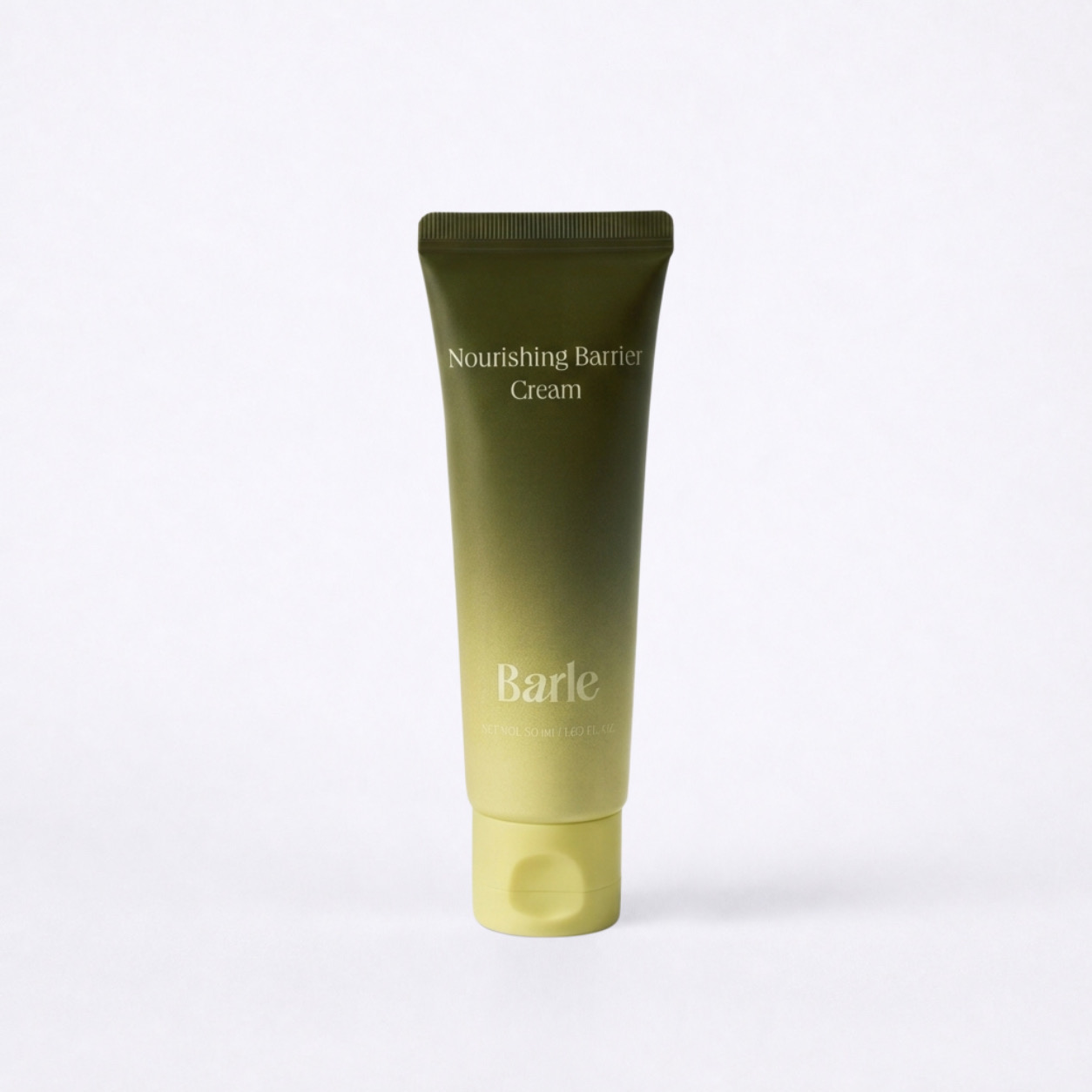
Nourishing Barrier Cream
Barle$49
For the lighter barrier tier. Ceramide, cholesterol, palmitic and stearic acid are all present, so it covers the same three lipid classes in a thinner texture, with squalane, panthenol and niacinamide. Its directions recommend layering it again on dry or sensitive patches.
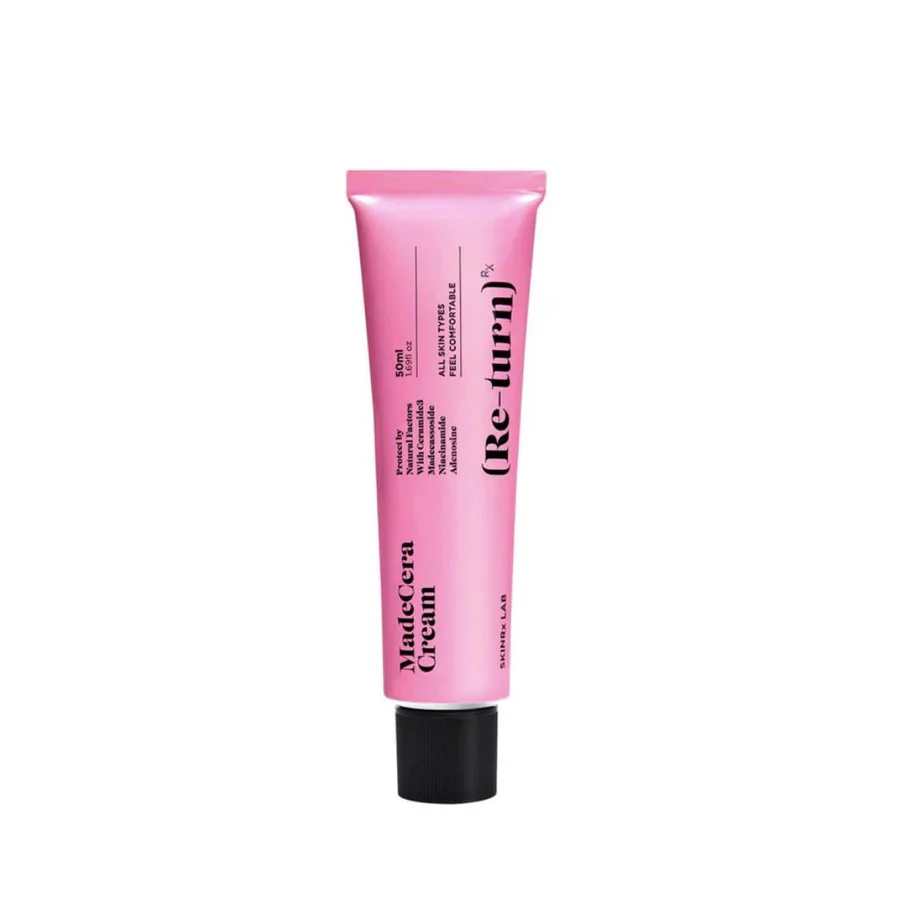
MadeCera Cream
SKINRxLAB$364.6 (92)
For the barrier cream job, and the best-matched formula we stock: six ceramide types are named, with cholesterol and a full set of fatty acids — the complete lipid combination rather than a single ceramide. Madecassoside and phytosphingosine sit alongside. Nothing fragranced. Final step, morning and night.
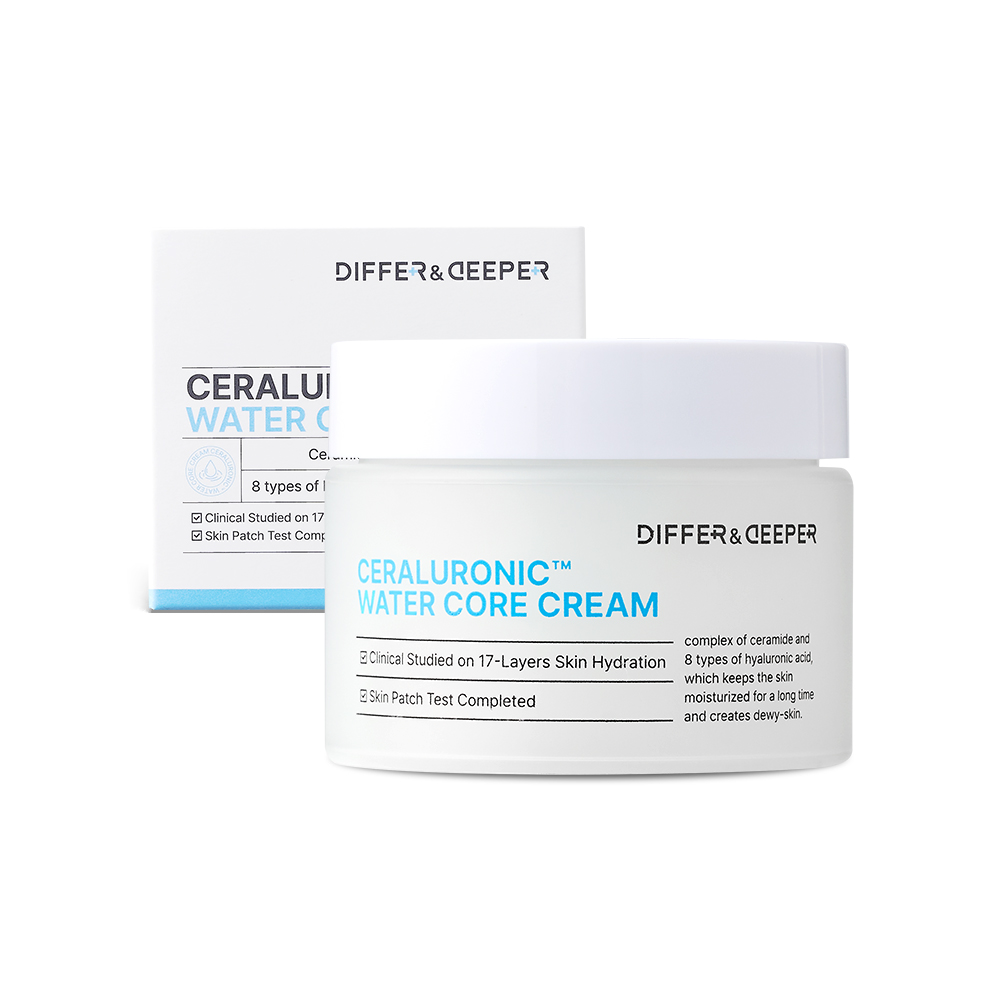
Ceraluronic water core cream
Differ&Deeper$45
For the hyaluronic cream job. Ceramide NP sits with cholesterol and fatty acids, this time alongside eight forms of hyaluronic acid, squalane, macadamia oil, niacinamide and panthenol, so it does barrier and water-holding work in one step. Irritation tested. Last step morning and evening, with a second layer on the driest patches.
Artemisia Ultra - Calming Gel
Earnest Mom$24.874.4 (191)
For the soothing gel job, and the lightest thing here. A short list built on fermented artemisia with centella, aloe ferment, hyaluronic acid and green tea. Genuinely fragrance-free, which the list bears out. Light, so very dry skin will want a cream over it.

How to use
For ILLIYOON's Lotion: spread a generous amount gently over face and body wherever skin feels dry, then layer the Concentrate Cream over the driest areas. For the Concentrate Cream: spread a generous amount on dry patches of face, arms and legs. For the Soothing Gel: spread a generous amount over dry, sensitive skin that wants cooling. For the picks above the same order holds: the lighter barrier cream over larger dry areas, the ceramide cream last, and a second layer wherever skin still feels tight.
The box
Five full-size Korean products, matched to your skin, every month.
Questions
What does a ceramide ppm figure on the label actually tell you?
That the brand will commit to a number, which most avoid. Then look for cholesterol and free fatty acids alongside it, since the barrier is built from all three.
Is a synthetic or pseudo-ceramide worse than a real one?
No. Natural ceramides are hard to keep stable, so lab-made analogues are standard. Judge the formula, not the molecule's origin.
What does madecassoside do in a barrier cream?
A centella asiatica fraction, used for soothing rather than repair. It addresses the discomfort while the lipids address the cause.
What does hypoallergenic actually mean on a label?
That the brand formulated with reactive skin in mind. No single agreed standard sits behind the word, so the ingredient list is where you confirm the details.
Should a barrier cream go on damp or dry skin?
Slightly damp. They work partly by slowing water loss, so skin that still holds moisture gives them something to hold in.
Full-size Korean beauty, curated for your skin, delivered every month.
Start your boxBuild your first box
Start your box