PDRN Serum
PDRN turns up in creams, masks and ampoules, but the serum is where most people meet it first — and where the formulation decisions actually matter. A PDRN serum is rarely just PDRN, so what else is in the bottle tells you more about whether it suits your skin than the headline ingredient does. Here's how to read one, and three worth knowing.

A PDRN serum is a lightweight, fast-absorbing treatment built around polydeoxyribonucleotide and applied early in a routine, after cleansing and toning. Almost every formula pairs it with something else — a humectant, a peptide complex, a barrier ingredient — and that supporting cast is what determines who the serum actually suits. Choose on the pairing, not the PDRN.
Benefits
PDRN serums fall into roughly three camps, and telling them apart is the whole job of choosing one.
The first is PDRN plus humectants — hyaluronic acid, glycerin, panthenol. These are the glow-and-plump serums, the closest to what the category's marketing promises, and the sensible default if you have no specific complaint beyond dullness or dehydration.
The second is PDRN plus barrier ingredients — oat, ceramides, ectoin. Here PDRN is a supporting player rather than the headline, and the serum is really a soothing product with a regenerative angle attached. This is the camp to look for if your skin is reactive, or if you are recovering from having overdone an active.
The third is PDRN plus other regenerative actives — exosomes, collagen, adenosine. These are concentrated ampoules more than daily serums, and they suit someone who already has a settled routine and wants to add an intensive layer rather than someone starting out.
One caveat applies across all three: the wound-healing evidence behind PDRN comes from injectable use, delivered under the skin. A serum has to cross the skin barrier, and PDRN is a fairly large molecule. Fast-absorbing is not the same as deeply penetrating. For what the ingredient is and where it came from, see our guide to PDRN.
Anyone with a diagnosed seafood allergy should get medical advice first, since PDRN is salmon-derived.
Recommended
Pink Lotus PDRN Hyaluron Glow Serum 30ml
Hanskin
The humectant camp, and the easiest starting point. PDRN is paired with a pink peptide complex and hyaluronic acid rather than carrying the formula alone, in a lightweight, fast-absorbing texture built as an early routine step. Its glow positioning tracks with how the category is generally sold — radiance and plumping rather than one targeted concern.
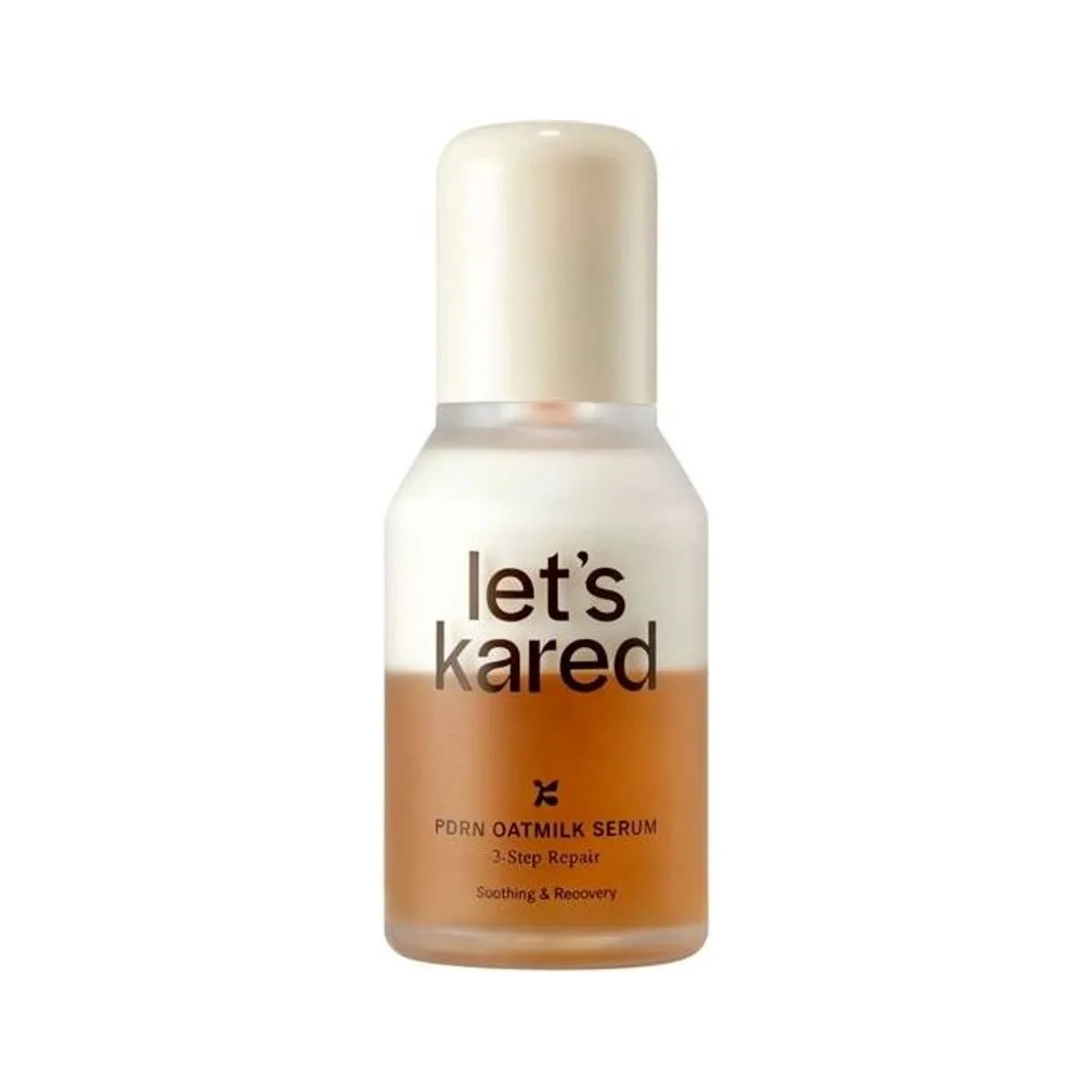
PDRN OATMILK SERUM
let's kared$45
The barrier camp. PDRN plays a smaller supporting role here alongside colloidal oatmeal, panthenol and ectoin in a formula built for sensitive skin. A milky, fast-absorbing texture that soothes and hydrates first, with the regeneration angle as a secondary benefit. The right pick if barrier repair is the priority and PDRN is a bonus rather than the reason you're buying.
PDRN Exosome Hydro Ampoule
WellDerma$494.5 (32)
The concentrated camp — an ampoule rather than a daily serum, combining PDRN with milk-derived exosomes, nine types of collagen and adenosine. Treatment-strength, and better suited to someone with an established routine who wants an intensive layer than to anyone meeting the ingredient for the first time. Use it as a course rather than a permanent step.

How to use
A PDRN serum goes on early — straight after cleansing and toning, before anything heavier, in the same slot as any other hydrating or repair-focused serum.
It layers comfortably with retinol, vitamin C and peptides. It isn't an exfoliant and doesn't carry those actives' irritation profile, which is why it's often used specifically to support skin already working through a retinol or acid routine rather than as something that needs cautious introduction itself. No cycling, no ramp-up: daily, morning and night, from the start.
If you've chosen a concentrated ampoule rather than a daily serum, treat it as a course of a few weeks rather than a permanent fixture.
The box
Five full-size Korean products, matched to your skin, every month.
Questions
How do I tell a good PDRN serum from a bad one?
Look past the PDRN at what it's paired with. A humectant pairing suits dull or dehydrated skin, a barrier pairing suits reactive skin, and a pairing with other regenerative actives makes it a treatment ampoule rather than a daily serum. The supporting ingredients tell you who the product is for.
Is a PDRN serum different from a PDRN cream or mask?
The ingredient behaves the same way, but a serum is lighter and faster-absorbing, which makes it the natural early step in a routine. Creams deliver it in a richer last-step format and masks as an occasional treatment.
What's the difference between a PDRN serum and a PDRN ampoule?
Mostly concentration and intent. An ampoule is typically more concentrated and often stacks other regenerative actives alongside PDRN, which makes it a treatment step to use in bursts rather than a gentle daily layer.
Can I use a PDRN serum with retinol?
Yes, and it's one of the more sensible pairings. PDRN isn't an exfoliant and doesn't add irritation, so it sits comfortably in a routine that's already doing demanding work elsewhere.
How long before a PDRN serum does anything?
Give it six to eight weeks. Any immediate change you notice in the first few days is the humectants in the formula doing their job rather than the PDRN.
Is PDRN serum worth trying right now, or should I wait?
It has a more legitimate clinical background than most trending ingredients, so trying it with realistic expectations is reasonable. Waiting for more independent, long-term research on topical use is a fair position too.
Full-size Korean beauty, curated for your skin, delivered every month.
Start your boxBuild your first box
Start your box