Mugwort
Mugwort shows up in Korean skincare with the kind of quiet consistency that suggests it actually works rather than trends — it was a staple of traditional Korean herbal medicine long before it became a toner ingredient. Here's what it does for skin, who benefits most, and how to layer it into a routine that needs to calm down.

Mugwort, also labelled artemisia or ssuk on Korean packaging, is a bitter, herbal-scented plant long used in traditional Korean medicine and now a staple calming ingredient in skincare. Topically it's extracted or fermented into toners, essences, gels and cleansers, valued for soothing redness, easing irritation and taking the edge off a stressed complexion without the heaviness of a rich cream.
Benefits
Mugwort's reputation in K-beauty rests almost entirely on calming, and that's exactly what it's good at. The plant's compounds have a long folk-medicine history for skin irritation, and modern formulas lean on that same profile, often pairing mugwort with centella or panthenol to knock down redness, tightness and the low-grade irritation that follows sun exposure, over-exfoliation or a new retinoid.
Mild antibacterial and antioxidant activity makes it a common pick for congested or blemish-prone skin that needs gentleness rather than another strong acid.
Why the essence format dominates. Mugwort is water-soluble and works by sitting on skin rather than penetrating deeply, so a watery essence or toner — applied to damp skin, patted in, often layered two or three times — delivers more of it more often than a single cream would. That's why the ingredient's most famous products are essences, and why a mugwort essence is usually the format to start with.
It suits sensitive, reactive or easily-flushed skin best. It's a good off-ramp on nights you'd normally reach for something stronger but your skin needs a break.
Mugwort isn't an exfoliant, brightening agent or wrinkle treatment — those goals need different ingredients alongside it, not instead of it. And it belongs to the same plant family as ragweed, so anyone with a known ragweed or daisy-family allergy should patch-test before using a leave-on mugwort product.
Recommended
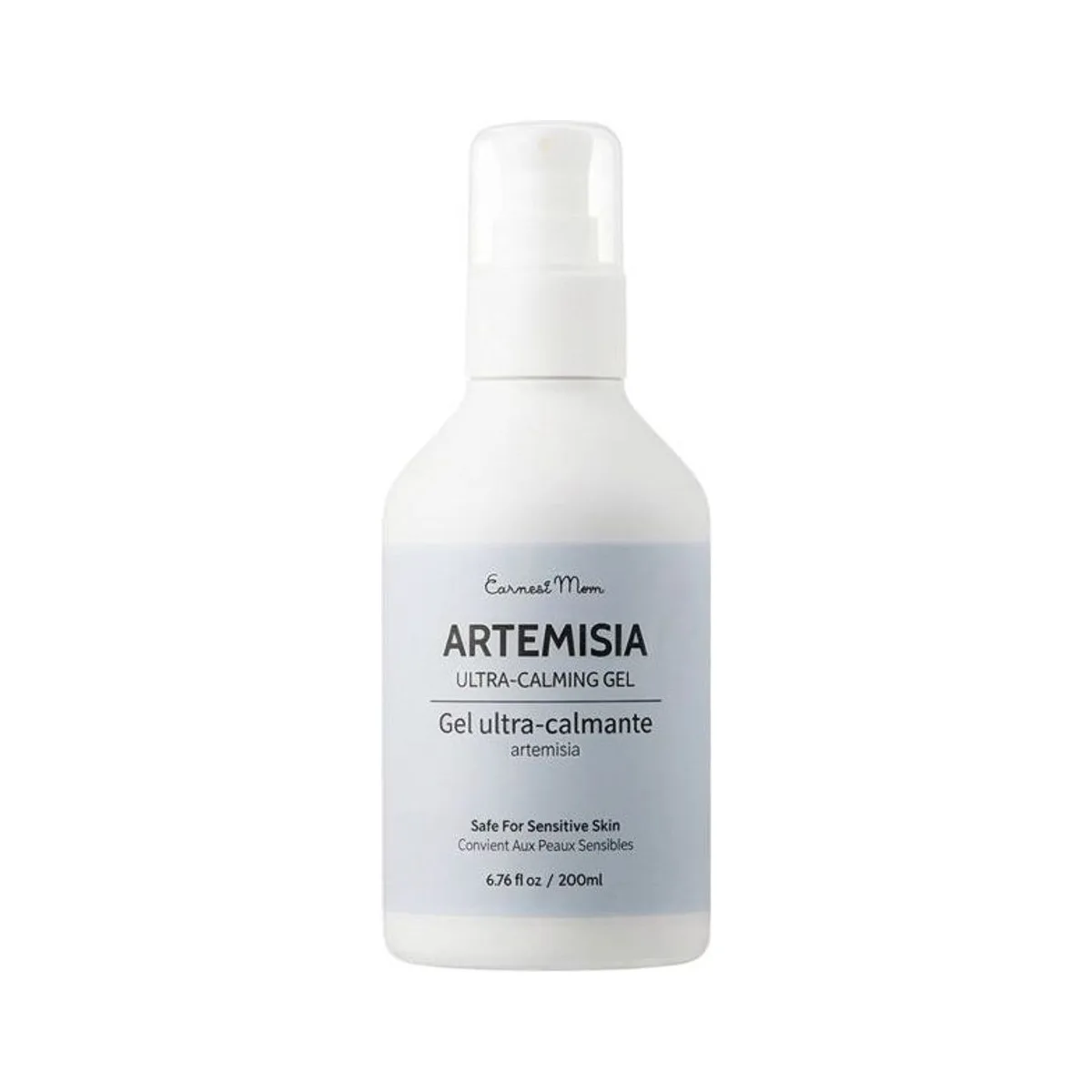
Artemisia Ultra - Calming Gel
Earnest Mom$24.874.4 (211)
Purified water is replaced entirely with 80%+ fermented Artemisia filtrate, aged 100 days, with centella and aloe ferment alongside it — so the mugwort is the base rather than an addition. A lightweight gel rather than a cream, which keeps it from feeling heavy on skin that's already inflamed, and layers under sunscreen without pilling. Formulated gently enough for newborn skin, which tells you something about how mild it is.
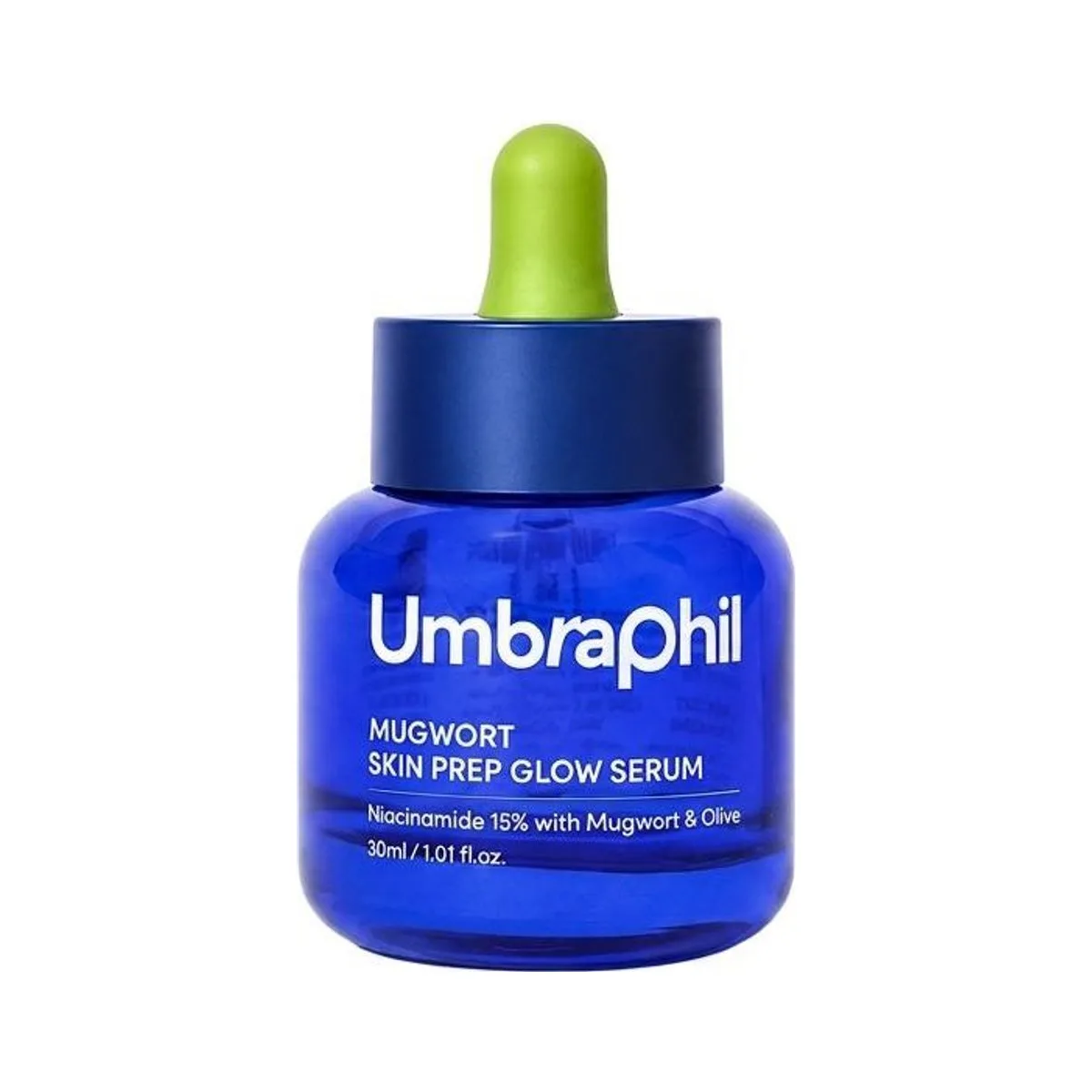
Mugwort Skin Prep Glow Serum
Umbraphil$254.6 (45)
A watery daily serum pairing mugwort extract with 15% niacinamide, so it does two jobs: the mugwort calms redness while the niacinamide works on tone and the look of pores. That makes it the more active of the two — worth knowing if your skin is currently reactive, since 15% niacinamide is a real dose. Absorbs fast with no tack, and sits well under makeup.
How to use
Mugwort works best as an early step in a routine built around soothing rather than treating, so apply it right after cleansing, before your actives or moisturizer. With a toner or essence, pat it in with your hands rather than rubbing — friction is the last thing irritated skin needs.
A mugwort gel or cream can go later instead, in place of a heavier moisturizer on days your skin runs hot, red or tight.
Because it's a calming ingredient rather than an active, there's no cycling or tolerance-building required — use it as often as your skin needs, including daily. Avoid layering it directly under strong acids or retinoids in the same step, which rather defeats the point; space them into different parts of the routine or different nights.
The box
Five full-size Korean products, matched to your skin, every month.
Questions
Is mugwort the same as wormwood?
They're closely related — both come from the Artemisia genus, and the two names are sometimes used interchangeably in translations from Korean labelling. The species most common in K-beauty is Artemisia argyi or Artemisia princeps, usually labelled simply as mugwort or artemisia extract.
What is a mugwort essence, and do I need one?
An essence is a watery, lightweight layer applied after cleansing and before serum. It's the format mugwort suits best, because it delivers a high proportion of extract in a texture you can layer repeatedly. You don't need one specifically, but it's the easiest way to get a lot of mugwort onto skin.
Can mugwort help with acne?
Indirectly. It isn't an acne treatment, but its calming and mild antibacterial properties reduce the redness and irritation that make active breakouts look worse, which is why it's often paired with centella or tea tree in blemish-focused lines rather than used alone.
Does mugwort skincare have a strong smell?
Many mugwort products carry a faint herbal, slightly bitter scent from the plant extract itself. It's usually mild and fades quickly rather than lingering the way an essential-oil based product would.
Who should avoid mugwort in skincare?
Anyone with a known allergy to ragweed, chrysanthemums or other daisy-family plants should patch-test before using a leave-on mugwort product, since cross-reactivity is possible. Pregnant or breastfeeding individuals should check with a doctor before using concentrated herbal extracts, out of general caution.
How is mugwort different from centella asiatica?
Both are calming, plant-derived staples in Korean skincare, but centella leans harder into barrier repair and wound-healing support, while mugwort's strength is more specifically anti-irritant and antioxidant. They're frequently formulated together because their profiles overlap without duplicating each other.
Full-size Korean beauty, curated for your skin, delivered every month.
Start your boxBuild your first box
Start your box