Tea Tree
Tea tree is one of the few Korean skincare botanicals that's genuinely an active ingredient rather than a calming extract, with real antibacterial evidence behind its reputation as an acne fighter. Here's what it actually does, how to use it safely, and our pick from the catalog.

Tea tree is an essential oil extracted from the leaves of Melaleuca alternifolia, valued in skincare for its natural antibacterial and anti-inflammatory properties, particularly against the bacteria associated with acne. Unlike most calming Korean skincare botanicals, tea tree is an active ingredient with real antimicrobial potency, which means it's genuinely more effective against breakouts than a purely soothing extract, but also carries a meaningfully higher irritation risk if used at too high a concentration.
Benefits
Tea tree's value comes from terpinen-4-ol and related compounds that have measurable antibacterial activity against Cutibacterium acnes, the bacteria strain most associated with inflammatory breakouts, along with mild anti-inflammatory effects that help calm the redness around active spots. Clinical comparisons have found tea tree oil performs reasonably well against benzoyl peroxide for mild to moderate acne, with a slower onset but generally less drying and irritating side effect profile. That combination — real antibacterial action with a gentler feel than benzoyl peroxide — is part of why it's remained a staple acne ingredient rather than being replaced by newer actives.
It suits acne-prone and oily skin especially well, particularly for anyone who's found benzoyl peroxide or salicylic acid too drying or irritating but still wants a genuinely active ingredient rather than a purely calming one. It's also useful as a spot treatment for occasional breakouts rather than a leave-on product across the entire face.
Tea tree isn't right for sensitive, reactive, or dry skin at higher concentrations, since essential oils carry more irritation potential than plant extracts or synthetic actives, and undiluted tea tree oil should never be applied directly to skin. It also won't address hyperpigmentation, texture, or aging concerns, since its strength is specifically antibacterial and anti-inflammatory rather than broadly corrective.
Recommended
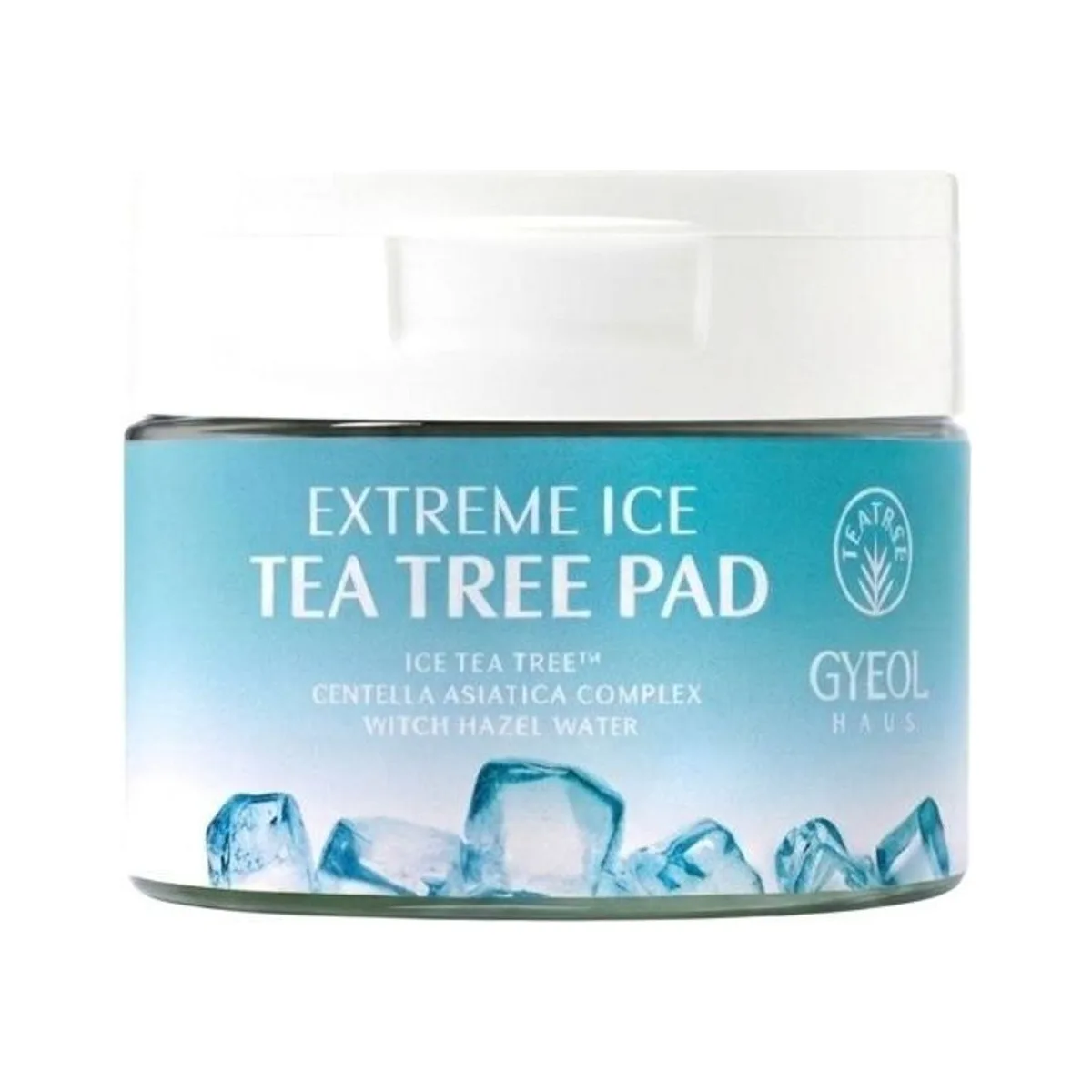
GYEOL HAUS EXTREME ICE TEA TREE PAD 70PADS
Gyeolhaus$18.464.6 (32)
Gyeolhaus's pads are pre-soaked in a tea tree solution formulated for spot-treating active breakouts rather than full-face application, which is a sensible way to deliver an essential-oil-based ingredient without the irritation risk of a leave-on serum applied everywhere. The 'extreme ice' cooling sensation suggests an immediate soothing effect alongside the antibacterial action, which can help with the discomfort that often comes with an active breakout. The 70-pad count makes it suited to extended, ongoing spot treatment rather than a single use, so it works as an on-hand option whenever a blemish flares up.
How to use
Tea tree works best as a targeted spot treatment rather than an all-over step, since its antibacterial strength comes with more irritation potential than most calming Korean skincare ingredients. Apply it directly to active breakouts after cleansing, ideally at night, and avoid spreading it over skin that isn't actually broken out. If you're using a pad or spot formula, a light dab or swipe over the blemish is enough — more product doesn't speed up the antibacterial effect and increases the chance of irritation or dryness around the area. Start with once-daily use and watch for excessive dryness, redness, or peeling before considering more frequent application. Avoid combining it with benzoyl peroxide or strong exfoliating acids on the same area in the same routine, since stacking two antibacterial or exfoliating actives on one spot significantly raises the risk of irritation.
The box
Five full-size Korean products, matched to your skin, every month.
Questions
Can you put tea tree oil directly on your skin?
Undiluted tea tree oil should never be applied directly to skin, since it's concentrated enough to cause irritation, burning, or an allergic reaction. Always use a formulated product with tea tree diluted to a safe percentage, or dilute pure oil yourself with a carrier oil before spot-treating.
Is tea tree oil as effective as benzoyl peroxide for acne?
Some clinical comparisons show tea tree performing reasonably well against benzoyl peroxide for mild to moderate acne, though typically with a slower onset. It tends to be less drying and irritating, which makes it a reasonable alternative for people who can't tolerate benzoyl peroxide.
Can tea tree oil be used on sensitive skin?
It's riskier for sensitive skin than most calming Korean skincare ingredients, since it's an essential oil with real antimicrobial potency rather than a gentle extract. Patch-testing and starting with a diluted, spot-treatment approach is safer than applying it broadly.
How often should you use tea tree oil for acne?
Once daily, typically at night, is a reasonable starting point for spot treatment. Watch for excessive dryness or irritation before increasing frequency, and stick to targeted application rather than covering unaffected skin.
Does tea tree oil help with blackheads or just active acne?
It's primarily studied and used for inflammatory, bacteria-related breakouts rather than blackheads specifically, which are more related to clogged pores and oil than bacteria. A BHA like salicylic acid is generally more effective for blackheads.
Full-size Korean beauty, curated for your skin, delivered every month.
Start your boxBuild your first box
Start your box